
Synonyms for But: 25+ Better Words and Examples
Last updated: October 6, 2026
Thank you for reading this post, don't forget to subscribe!“But” is one of the most overused words in English. We reach for it every time we want to contrast two ideas — yet repeating it in every paragraph makes your writing sound flat and repetitive. The good news is that English is full of alternatives. In this guide, you’ll find 25+ synonyms for “but” with examples, so you can express contrast more clearly and sound more polished. For even more options, browse the Merriam-Webster Thesaurus whenever you need a fresh word.
Table of Contents
- Quick Answer
- What Does “But” Mean?
- The Closest Alternatives to “But”
- “But” Synonyms at a Glance
- Synonyms for “But” by Context
- How to Use “But” Correctly
- When Not to Use a Synonym for “But”
- Frequently Asked Questions
Quick Answer
- However — the safest formal replacement; works almost everywhere
- Yet — adds a note of surprise to the contrast
- Nevertheless — formal and deliberate; good for essays
- Still — softer and more conversational
- Though — flexible; works at the start, middle, or end of a sentence
- Although — best for starting a contrasting clause
- On the other hand — introduces a balanced opposite view
- In contrast — direct comparison between two things
- Instead — signals a replacement rather than a simple contrast
- Despite this — emphasizes that something happened anyway
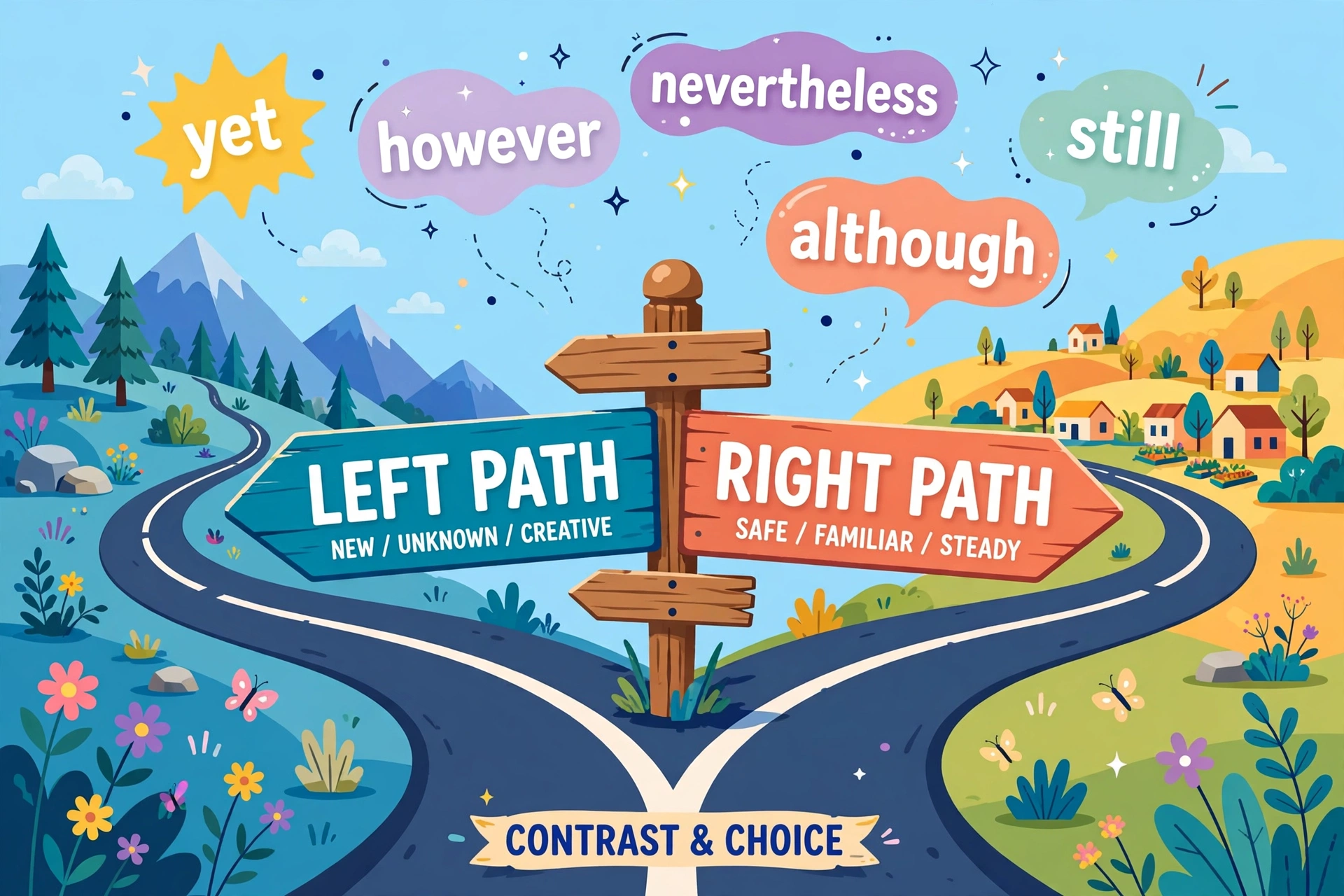
What Does “But” Mean?
“But” is a coordinating conjunction — a small word with a big job. It connects two ideas and tells the reader that the second one contrasts with, limits, or exceptions the first. Think of it as a pivot: everything before it sets an expectation, and everything after it turns that expectation around.
For example: “I wanted to go out, but it started raining.” The first half creates a plan; “but” pivots to the problem. Because it is so short and familiar, “but” is perfect for speech and casual writing — but in formal essays and reports, swapping it for a synonym keeps your writing fresh and precise. If you want to keep building your vocabulary, check out our guide to synonyms for sad for the same treatment of another overused word.
The Closest Alternatives to “But”
However
Meaning: Introduces a contrast or exception to what was just said.
Difference: More formal than “but”; often starts a new sentence.
Tone: Neutral, professional.
Best Use: Essays, business emails, academic writing.
Example: “The plan looked perfect on paper. However, the costs were much higher than expected.”
Yet
Meaning: Connects two contrasting ideas with a sense of surprise.
Difference: Implies the contrast is unexpected or remarkable.
Tone: Slightly dramatic, expressive.
Best Use: Storytelling, persuasive writing.
Example: “The task seemed impossible, yet she finished it in an hour.”
Nevertheless
Meaning: Signals that something is true despite what was just stated.
Difference: Stronger and more deliberate than “but”; carries weight.
Tone: Formal, confident.
Best Use: Formal essays, reports, speeches.
Example: “The journey was exhausting; nevertheless, everyone agreed it was worth it.”
Still
Meaning: Adds a contrasting point without sounding abrupt.
Difference: Softer and more casual than “however.”
Tone: Friendly, conversational.
Best Use: Everyday writing, emails to colleagues, blog posts.
Example: “He missed two practices. Still, he played well in the final.”
Though
Meaning: Introduces a contrasting idea; very flexible in position.
Difference: Can start, interrupt, or end a sentence (“…though”).
Tone: Neutral to casual.
Best Use: Conversational writing, dialogue, informal essays.
Example: “The movie was long. Worth watching, though.”
Although
Meaning: Begins a clause that contrasts with the main idea.
Difference: Must introduce a full clause with a subject and verb.
Tone: Neutral, slightly formal.
Best Use: Academic and formal writing.
Example: “Although it was raining, the match continued.”
On the Other Hand
Meaning: Presents an opposing point of view in a balanced way.
Difference: Works best when two sides of an issue are being weighed.
Tone: Fair-minded, analytical.
Best Use: Arguments, reviews, comparisons.
Example: “The salary is attractive. On the other hand, the commute would be two hours a day.”
In Contrast
Meaning: Directly compares two different things or ideas.
Difference: Emphasizes difference more than exception.
Tone: Objective, analytical.
Best Use: Reports, data discussions, comparisons.
Example: “The first quarter was slow. In contrast, the second quarter broke records.”
Instead
Meaning: Shows that one thing replaced another.
Difference: Implies a choice between alternatives, not just a contrast.
Tone: Neutral, decisive.
Best Use: Instructions, narratives, decision explanations.
Example: “He didn’t apologize. Instead, he blamed his teammates.”
Despite This
Meaning: Shows something happened anyway, against expectations.
Difference: Adds emphasis that the outcome was unlikely.
Tone: Neutral to emphatic.
Best Use: Reports, storytelling, persuasive writing.
Example: “The weather was terrible. Despite this, the event drew a large crowd.”
“But” Synonyms at a Glance
| Alternative | Main Meaning | Tone | Best Use |
|---|---|---|---|
| However | Introduces a contrast | Neutral, formal | Essays, business writing |
| Yet | Unexpected contrast | Expressive | Storytelling, persuasion |
| Nevertheless | In spite of what was said | Formal, confident | Reports, speeches |
| Still | Gentle contrast | Friendly, casual | Everyday writing |
| Though | Flexible contrast | Neutral to casual | Conversational writing |
| Although | Opens a contrasting clause | Slightly formal | Academic writing |
| On the other hand | Balanced opposing view | Fair-minded | Arguments, reviews |
| In contrast | Direct comparison | Objective | Data, comparisons |
| Instead | Replacement choice | Decisive | Narratives, instructions |
| Despite this | Against expectations | Emphatic | Reports, persuasion |
Synonyms for “But” by Context
Formal Writing (Essays, Reports, Applications)
- However — the standard formal swap.
- Nevertheless — adds authority to your contrast.
- Although — clean and precise for academic sentences.
- Conversely — highlights an exact opposite.
Casual Speech and Everyday Writing
- Still — keeps things light and friendly.
- Though — natural in conversation and dialogue.
- Yet — adds a little flair to the contrast.
- Except — for simple exclusions: “Everyone came except Ali.”
Business and Professional Communication
- However — safe and professional in emails.
- That said — acknowledges a point before pivoting.
- On the other hand — useful when weighing options.
- In contrast — clear for reports and presentations.
How to Use “But” Correctly
As a coordinating conjunction, “but” joins two independent clauses: “She studied hard, but she still failed the test.” Notice the comma before “but” — that comma is required when both sides can stand alone as sentences. Starting a sentence with “But” is common in casual writing and fiction, though many style guides prefer “However” in formal work. A common trap is the comma splice: “I love coffee, but I drink tea.” is correct, but “I love coffee but, I drink tea” misplaces the comma. Also watch out for double contrasts — using “but” and “however” in the same sentence (“but however”) is redundant; pick one.
When Not to Use a Synonym for “But”
1. When “except” is the real meaning.
Wrong: “Everyone stayed late however the manager left early.”
Corrected: “Everyone stayed late except the manager.” — Here you mean exclusion, not contrast, so “except” is the right word.
2. When you need a strong formal contrast and choose “still.”
Wrong: “The evidence was inconclusive. Still, the committee approved the policy.”
Corrected: “The evidence was inconclusive. Nevertheless, the committee approved the policy.” — “Still” sounds too casual for the weight of the decision.
3. When stacking two contrast words.
Wrong: “It was expensive, but however we bought it anyway.”
Corrected: “It was expensive, but we bought it anyway.” — One contrast word is enough; doubling them is redundant.
Frequently Asked Questions
What is the best formal synonym for “but”?
“However” is the safest choice for formal writing. It works in essays, reports, and professional emails without sounding stiff.
Is it okay to start a sentence with “but”?
Yes, in casual writing and fiction it is perfectly natural. In formal academic or business writing, start with “However” instead.
What is the difference between “but” and “yet”?
Both show contrast, but “yet” adds a sense of surprise — the contrast feels unexpected. “But” is neutral; “yet” is more dramatic.
Can “although” replace “but”?
Not directly. “Although” must introduce a full clause (“Although it rained…”), while “but” simply joins two ideas. Restructure the sentence when swapping.
Want to keep sharpening your word choice? Explore our pillar guide to synonyms for 200+ common words for even more alternatives.
Faizi is a content writer at AllAboutFacts (hotteamnames.com), covering vocabulary, language tips, and everyday explainers.


