
Synonyms for So: 25+ Better Words and Examples
Last updated: October 6, 2026
Thank you for reading this post, don't forget to subscribe!“So” is one of the hardest-working words in English. It shows results, adds emphasis, starts stories, and fills pauses in conversation — which means we lean on it far too often. Repeating “so” in every sentence makes your writing sound flat and your speech sound scattered. The good news is that almost every use of “so” has a sharper, more precise alternative. In this guide, you’ll find 25+ synonyms for “so” with examples, so you can pick the right word for every situation. For even more options, browse the Merriam-Webster Thesaurus whenever you need a fresh word.
Table of Contents
- Quick Answer
- What Does “So” Mean?
- The Closest Alternatives to “So”
- “So” Synonyms at a Glance
- Synonyms for “So” by Context
- How to Use “So” Correctly
- When Not to Use a Synonym for “So”
- Frequently Asked Questions
Quick Answer
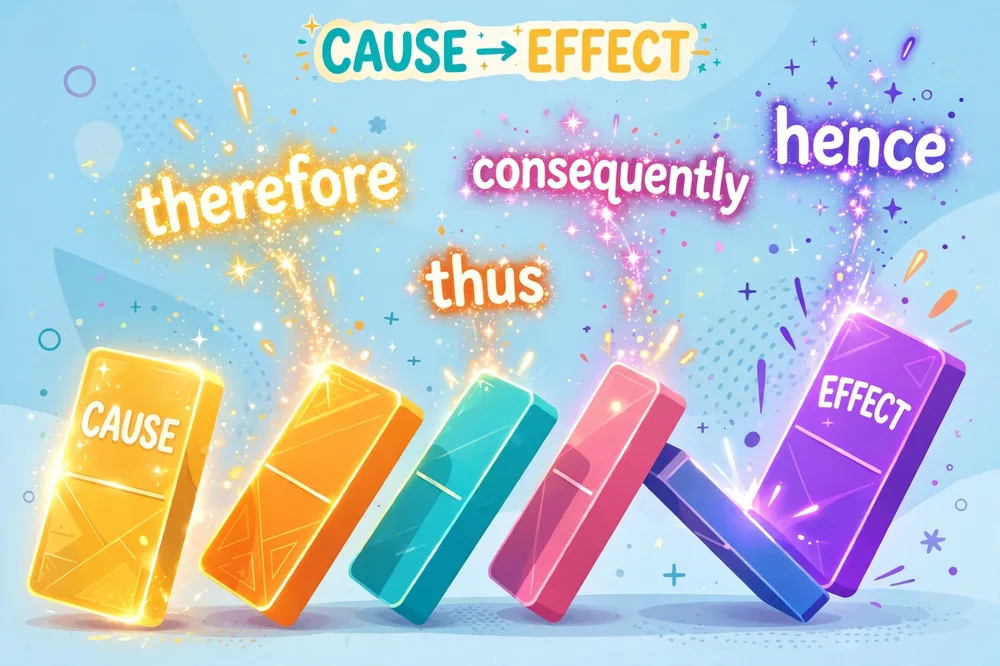
- Therefore — the classic formal replacement when “so” shows a result
- Thus — formal and concise; a favorite in academic writing
- Consequently — stresses that one thing directly caused another
- Hence — elegant and compact; great for reports and essays
- Accordingly — shows a planned response to what came before
- As a result — clear and neutral for almost any context
- So that — shows purpose when “so” explains why something is done
- Very — the everyday swap when “so” adds emphasis (“so tired” → “very tired”)
- Extremely — stronger emphasis for serious situations
- Incredibly — adds energy and excitement to the emphasis
What Does “So” Mean?
“So” is a multi-purpose function word with three main jobs. As a conjunction, it shows cause and effect: “It was raining, so we stayed inside.” As an adverb, it adds intensity: “The movie was so good.” As a discourse marker, it starts or steers conversations: “So, what happened next?” Because it is short, familiar, and flexible, “so” feels natural in speech — but in writing, the right synonym sounds sharper and more confident. If you enjoy upgrading overused words like this, our guide to synonyms for but treats another hard-working little word the same way.
The Closest Alternatives to “So”
Therefore
Meaning: Shows that one thing logically follows from another.
Difference: More formal and deliberate than “so”; suits written arguments.
Tone: Neutral, professional.
Best Use: Essays, business reports, formal arguments.
Example: “Sales doubled this quarter. Therefore, we are expanding the team.”
Thus
Meaning: Indicates a result or conclusion in a compact way.
Difference: Shorter and more academic than “therefore.”
Tone: Formal, scholarly.
Best Use: Academic papers, technical writing.
Example: “The data was incomplete; thus, the findings remain tentative.”
Consequently
Meaning: Emphasizes a direct cause-and-effect link.
Difference: Stronger than “so”; highlights that the outcome was caused by what came before.
Tone: Formal, serious.
Best Use: Reports, journalism, official statements.
Example: “The bridge was damaged. Consequently, all traffic was rerouted.”
Hence
Meaning: Points from a fact to its natural conclusion.
Difference: Compact and slightly old-fashioned; often appears mid-sentence.
Tone: Elegant, formal.
Best Use: Essays, speeches, polished writing.
Tone: Elegant, formal.
Example: “The deadline is fixed, hence the extra weekend shifts.”
Accordingly
Meaning: Shows an action taken in response to something.
Difference: Implies a deliberate, planned reaction rather than a simple result.
Tone: Professional, measured.
Best Use: Business communication, formal letters.
Example: “Demand rose sharply, and the factory adjusted its output accordingly.”
As a Result
Meaning: Introduces the outcome of a situation.
Difference: Neutral and clear; works in nearly any register.
Tone: Plain, informative.
Best Use: News writing, everyday explanations, reports.
Example: “He skipped breakfast. As a result, he felt dizzy by noon.”
Very
Meaning: Adds emphasis, replacing “so” in phrases like “so tired.”
Difference: Less emotional than “so”; sounds calmer and more standard.
Tone: Neutral, everyday.
Best Use: Any writing or speech where “so” is just an intensifier. For more on this one, see our article on synonyms for very.
Example: “She was so nervous before the interview.” → “She was very nervous before the interview.”
Extremely
Meaning: Adds strong emphasis, more forceful than “very.”
Difference: Carries real weight; don’t use it for trivial things.
Tone: Serious, emphatic.
Best Use: Formal descriptions, serious situations.
Example: “The exam was so difficult.” → “The exam was extremely difficult.”
So That
Meaning: Shows purpose — the reason an action was taken.
Difference: Two words, but it replaces “so” when “so” means “in order that.”
Tone: Neutral.
Best Use: Instructions, explanations of intent.
Example: “He left early so he could catch the train.” → “He left early so that he could catch the train.”
In Order To
Meaning: Expresses the goal behind an action.
Difference: More formal and explicit than “so.”
Tone: Formal, precise.
Best Use: Instructions, applications, formal writing.
Example: “She saved money so she could travel.” → “She saved money in order to travel.”
“So” Synonyms at a Glance
| Alternative | Main Meaning | Tone | Best Use |
|---|---|---|---|
| Therefore | Logical result | Neutral, formal | Essays, arguments |
| Thus | Result or conclusion | Formal, scholarly | Academic writing |
| Consequently | Direct cause and effect | Formal, serious | Reports, news |
| Hence | Fact to conclusion | Elegant, formal | Speeches, essays |
| Accordingly | Planned response | Professional | Business writing |
| As a result | Outcome | Plain, neutral | Explanations, reports |
| Very | Emphasis | Neutral, everyday | Replacing “so + adjective” |
| Extremely | Strong emphasis | Serious, emphatic | Serious descriptions |
| So that | Purpose | Neutral | Instructions, intent |
| In order to | Goal of an action | Formal, precise | Formal writing |
Synonyms for “So” by Context
Formal Writing (Essays, Reports, Applications)
- Therefore — the standard formal swap for cause and effect.
- Thus — compact and scholarly.
- Consequently — stresses a real causal link.
- Hence — elegant and concise.
Casual Speech and Everyday Writing
- As a result — clear without sounding stiff.
- That’s why — natural conversational option: “That’s why I called.”
- Really — for emphasis: “It was really good” instead of “so good.”
- Too — for excess: “The box was too heavy” instead of “so heavy.”
Business and Professional Communication
- Accordingly — shows a measured, planned response.
- Therefore — safe and professional in emails.
- As a result — factual and neutral for updates.
- In order to — precise when explaining purpose.
How to Use “So” Correctly
“So” joins a cause to its effect: “The roads were icy, so the match was postponed.” Note the comma before “so” when it links two independent clauses. As an intensifier, “so” comes before adjectives and adverbs (“so quickly,” “so kind”) — but in formal writing, “very,” “extremely,” or a stronger adjective (“exhausted” instead of “so tired”) reads better. As a sentence starter in conversation (“So, I was thinking…”), “so” is a discourse marker that signals you’re taking the floor; this is perfectly natural in speech but should be cut from formal writing. A common grammar trap: “so…that” needs both parts — “The box was so heavy that I dropped it,” not “The box was so heavy I dropped it” in formal prose.
When Not to Use a Synonym for “So”
1. When “so” means “also” in agreement (“I think so”).
Wrong: “Do you agree?” — “Therefore.”
Corrected: “Do you agree?” — “Yes, I think so.” — Here “so” stands in for a whole idea, and no synonym for “so” can replace it. Rephrase instead.
2. When a formal synonym sounds pompous in casual text.
Wrong: “I was hungry. Consequently, I made a sandwich.”
Corrected: “I was hungry, so I made a sandwich.” — “Consequently” is too heavy for a sandwich. Match the word to the weight of the situation.
3. When “so” is just a conversation filler.
Wrong: “Thus, I was like, where is everyone?”
Corrected: “So, I was like, where is everyone?” — A synonym can’t fix a filler word; in casual speech, it’s better to leave “so” alone or simply drop it.
Frequently Asked Questions
What is the best formal synonym for “so”?
“Therefore” is the safest formal choice when “so” shows a result. “Thus” and “consequently” are excellent in academic and professional writing.
Can “very” replace “so”?
Yes, when “so” is just adding emphasis: “so tired” → “very tired.” “Very” sounds calmer and more standard, which suits formal writing better.
Is it okay to start a sentence with “so”?
In conversation and casual writing, yes — it’s a natural way to begin or steer a thought. In formal writing, replace it with “therefore,” “thus,” or “as a result.”
What is the difference between “so” and “therefore”?
Both show cause and effect, but “therefore” is more formal and works best between sentences. “So” is shorter and friendlier, which makes it the better pick for speech and casual text.
Want to keep sharpening your word choice? Explore our pillar guide to synonyms for 200+ common words for even more alternatives.
Faizi is a content writer at AllAboutFacts (hotteamnames.com), covering vocabulary, language tips, and everyday explainers.


