
Melissa and Doug Vending Machine: A Parent’s Honest Guide
Last updated: October 30, 2026
Thank you for reading this post, don't forget to subscribe!Table of Contents
- Quick Answer
- What Is the Melissa and Doug Vending Machine?
- What Is Included in the Box?
- How Does It Work?
- What Do Kids Actually Learn From It?
- Who Is It Best For?
- Price and Value: Is It Worth It?
- Things to Know Before You Buy
- Frequently Asked Questions
Quick Answer
The Melissa and Doug vending machine is a wooden pretend-play toy called the Sort, Stock, Select Wooden Vending Machine Play Set. It is made for children ages 3 to 6 and lets kids stock a small wooden machine with play snacks and drinks, pay with play coins or a bank card, press a letter-and-number code, and watch their snack drop into a collection drawer. It needs no batteries and no assembly, and it usually sells for around $80 to $100 at major retailers. It is a sturdy, screen-free toy that teaches sorting, counting, and cause and effect through play.
What Is the Melissa and Doug Vending Machine?
First, a quick clarification: Melissa and Doug are not two separate people selling a vending machine. Melissa & Doug is a single American toy company, founded in 1988 by husband-and-wife team Melissa and Doug Bernstein. The company is best known for wooden puzzles, play food, and pretend-play sets, and it has been a subsidiary of Spin Master since 2024.
The vending machine is one of its most popular pretend-play sets. It is a wooden machine, about 17 inches high, 12.5 inches wide, and 5.5 inches deep, designed to look and feel like a real snack machine shrunk down to playroom size. Unlike a plastic toy with lights and sounds, it is powered entirely by your child: every part of the game, from stocking the shelves to collecting the snack, is done by hand.
The set is part of the company’s “Sort, Stock, Select” line, a name that describes exactly how children play with it. There is also a sibling version, the Sort, Stock, Select Beauty Kiosk, which swaps snacks for pretend beauty items, but the original food version remains the best known.
What Is Included in the Box?
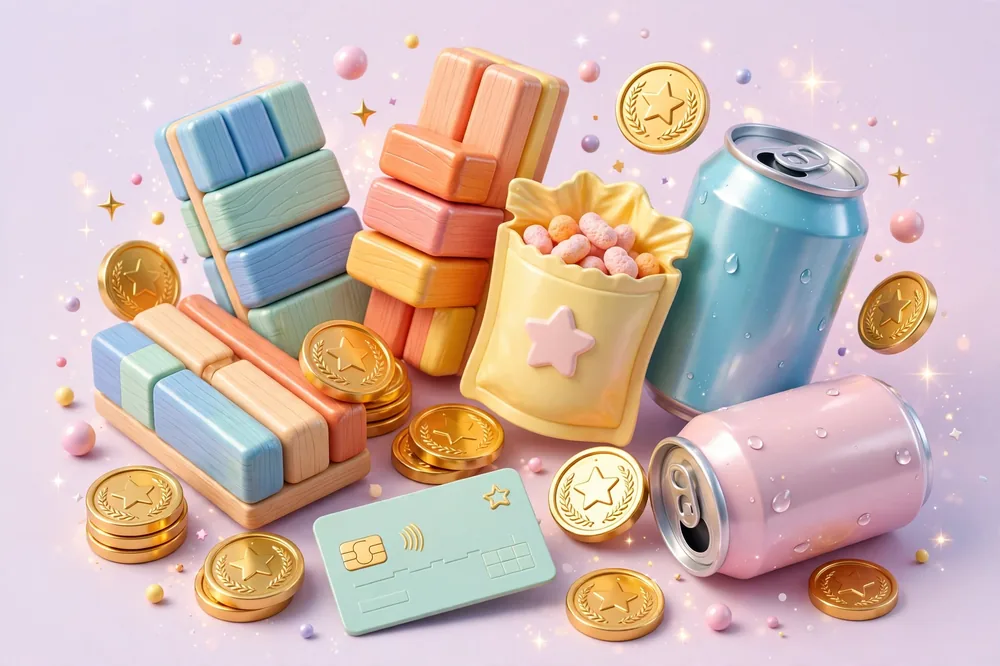
The set contains 19 pieces in total. The main piece is the wooden vending machine itself, with a clear front window, a keypad with letter and number buttons, a coin slot, a card slot, and a collection drawer at the bottom. The back opens up so children can load the machine from behind, just like a real shopkeeper would.
Inside, you will find nine double-sided play food packages: three wooden snack bars, three drink cans, and three snack pouches. Each piece is printed on both sides, so children can flip items around when they stock the shelves. The set also includes three play coins, a pretend bank card, a double-sided sign that can be personalized with the shop’s name, and a reusable activity card for keeping track of what is stocked and what needs ordering. Everything stores inside the machine, so there is no separate box of loose pieces to lose.
How Does It Work?
Play follows the same steps a real vending machine visit would, which is exactly why children love it:
- Stock it: Open the back of the machine and arrange the snack bars, drink cans, and pouches on the shelves. Kids can sort them by type, color, or size, and the activity card helps them track what is on display.
- Choose: The “customer” looks through the front window, picks an item, and finds its letter-and-number code on the keypad.
- Pay: Insert a color-matching play coin into the slot, or slide in the pretend bank card.
- Press and collect: Press the matching letter and number buttons, and the snack drops into the collection drawer at the bottom.
- Restock and repeat: The shopkeeper opens the back again, refills the empty slot, and the game starts over.
Because the machine has no batteries, there are no sounds or motors doing the work. The dropping snack, the turning over of a new role from customer to shopkeeper, and the small ritual of paying are what make it feel real. Children often play it in pairs, taking turns as shopkeeper and customer, which adds a social layer that solo electronic toys cannot match.
What Do Kids Actually Learn From It?
Behind the fun, the vending machine quietly practices several early learning skills. Sorting the snacks by type or color builds early classification skills. Matching coins to slots and codes to keypad buttons builds color, letter, and number recognition. Counting coins and items practices early math. And the whole stock-pay-drop sequence teaches cause and effect: press the right code after paying, and something happens.
Fine motor skills get a workout too: small hands place coins in slots, press small buttons, open the back panel, and fish snacks out of the drawer.
Perhaps most valuable is the imaginative play itself. Running a little shop lets children try out grown-up roles, practice polite conversation (“What would you like today?”), and learn the basics of how buying and selling works, all in a low-pressure game. Setting up a dedicated play corner helps here too: a well-chosen kids desk and chair set gives little shopkeepers a counter to run their business from.
Who Is It Best For?
The manufacturer recommends the set for ages 3 to 6, and that range fits well. Three-year-olds enjoy the simple joy of pressing buttons and collecting snacks, while five- and six-year-olds get more out of the sorting, the activity card, and the shopkeeper role-play. It suits children who love pretend kitchens, play stores, and food toys, and it pairs naturally with other wooden play food sets.
It is also a good fit for classrooms and playrooms. Teachers and caregivers like that it needs no batteries, makes no noise, and keeps all its pieces in one place. The sturdy wooden build handles daily use better than most plastic alternatives, and the gender-neutral design works for any child. For families looking for quiet, creative activities in the same age range, Lilo and Stitch coloring pages are another screen-free option that pairs well with hands-on play.
Price and Value: Is It Worth It?
The vending machine typically sells for around $80 to $100 at major retailers, which puts it at the higher end of the pretend-play range. That price is the most common complaint from parents, and it is worth weighing honestly.
What you get for the money is a solid wooden toy from a well-known brand, with no batteries to replace and no electronics to break. Many parents report that it becomes a daily-play toy rather than a one-week novelty, which changes the value calculation considerably. A cheaper plastic vending machine may cost half as much, but it rarely survives the same level of enthusiastic play.
A practical tip: the price often drops during holiday sales and toy events, so if the full price feels steep, waiting for a seasonal discount is a sensible move. Also remember that children can restock the machine with their own small toys or light real snacks, which keeps the play fresh long after the included pieces feel familiar.
Things to Know Before You Buy
A few honest notes will help set expectations. First, the coin mechanism takes a little practice: the coin sits in the slot and is pushed through when the buttons are pressed, rather than dropping straight in, and younger children may need a demonstration before they get the hang of it. Second, the machine is fairly large at about 17 inches tall, so it needs a dedicated shelf or table spot rather than a toy bin. Third, the play food pieces are small, so this is not a toy for toddlers who still mouth objects; the 3-and-up age guidance should be taken seriously.
On the positive side, the set arrives fully assembled and everything stores inside the machine, so cleanup is simple. If your child loves heroic teamwork stories, character play like Spidey and his amazing friends characters can add story ideas to shopkeeper games, with the vending machine as the heroes’ snack stop.
Frequently Asked Questions
What age is the Melissa and Doug vending machine for?
The manufacturer recommends it for children ages 3 to 6. Younger preschoolers enjoy the button-pressing and snack-collecting, while older children get more from the sorting and shopkeeper role-play.
Does the Melissa and Doug vending machine need batteries?
No. It is fully manual, with no batteries and no assembly required. Children power every part of the play themselves.
What comes with the Melissa and Doug vending machine?
The 19-piece set includes the wooden machine, nine double-sided play food items (snack bars, drink cans, and pouches), three play coins, a bank card, a customizable sign, and a reusable activity card.
Is the Melissa and Doug vending machine worth the price?
For families who want a durable, screen-free, battery-free pretend-play toy that gets daily use, most owners say yes. If the price feels high, waiting for a holiday sale is a good strategy, since the set is often discounted.
Faizi is a content writer at AllAboutFacts (hotteamnames.com), covering vocabulary, language tips, and everyday explainers.