
I Am the Way, the Truth, and the Life: John 14:6 Meaning
Last updated: October 24, 2026
Thank you for reading this post, don't forget to subscribe!Table of Contents
- Quick Answer
- The Verse Itself
- The Setting: Jesus’ Farewell Discourse
- Breaking Down “the Way, the Truth, and the Life”
- What “No One Comes to the Father Except Through Me” Means
- How People Use This Verse Today
- Helping Children Understand John 14:6
- Common Misunderstandings
- Frequently Asked Questions
Quick Answer
“I am the way, the truth, and the life” is Jesus’ answer to his disciple Thomas in John 14:6. When Thomas asked how they could know the way to where Jesus was going, Jesus redirected the question: the way to God is not a map, a set of directions, or a religious system, but a person — himself. It is one of the most quoted sentences in the New Testament and one of the clearest summaries of what Christians believe about Jesus.
The Verse Itself
The King James Version reads: “Jesus saith unto him, I am the way, the truth, and the life: no man cometh unto the Father, but by me.” Modern translations say the same thing in today’s English — you can read John 14 side by side in several translations on Bible Gateway.
You may have seen the verse written two ways — “I am the way, the truth, and the life” and “I am the way and the truth and the life.” Both are the exact same verse; some translations repeat “and” before each term, others use a comma series. The difference is purely stylistic. It is one of the seven famous “I Am” statements in John’s Gospel, alongside “I am the bread of life” and “I am the true vine.”
The Setting: Jesus’ Farewell Discourse
Context matters enormously here. These words were spoken on the night before Jesus’ crucifixion, during his final meal with his disciples. Earlier that evening he had washed their feet, predicted Judas’ betrayal, and told them he would soon be leaving. The disciples were confused and frightened.
Chapters 14 through 17 of John’s Gospel are called the Farewell Discourse — Jesus’ last extended teaching before his death. He opens with “Let not your hearts be troubled,” promises many rooms in his Father’s house, then says something puzzling: “You know the way to where I am going.” Thomas asks honestly: “Lord, we do not know where you are going. How can we know the way?” John 14:6 is Jesus’ direct reply. The disciples wanted directions; Jesus gave them himself.
Breaking Down “the Way, the Truth, and the Life”
- The Way. The Greek word is hodos — a road, route, or journey. Note the wording: Jesus does not say he will show the way; he says he is the way. The route to God is a person to trust, not information to master. Fittingly, the earliest Christians were called followers of “the Way” (Acts 9:2).
- The Truth. A claim about identity: Jesus presents himself as ultimate reality in person — the truth about God and humanity embodied, not merely an idea to hold.
- The Life. In John’s Gospel, “life” means full, God-connected, eternal life — beginning now in relationship with Jesus and continuing beyond death. He had already said, “I am the resurrection and the life” (John 11:25); here that promise is folded into one sweeping self-description.
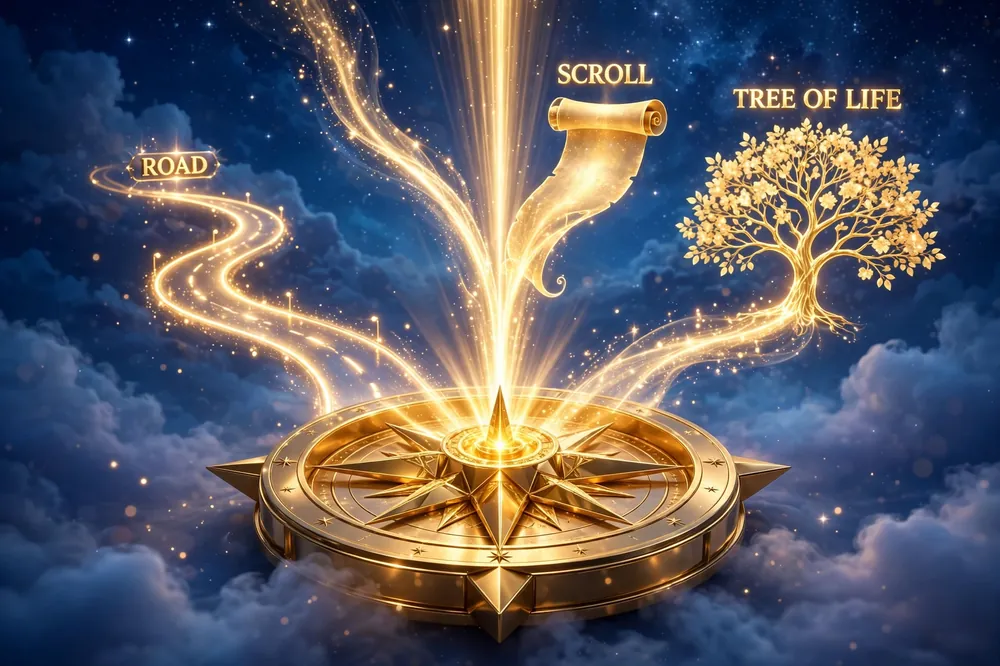
Together, the three words answer Thomas three times over: how do we get there? Through me. What can we count on? Me. What awaits us? The life I give.
What “No One Comes to the Father Except Through Me” Means
The second half of the verse is its most debated sentence — an exclusive claim. Within Christian teaching it is foundational: forgiveness and eternal life come through Jesus’ death and resurrection rather than through human effort or any other path. It is often quoted in discussions about Christianity’s relationship to other faiths.
The verse itself does not speculate about individuals; it simply records what Jesus said about himself — that he, not a system or an institution, is the single meeting point between humanity and God.
How People Use This Verse Today
John 14:6 is read at funerals, quoted in preaching, printed on wall art, and chosen as a confirmation or baptism verse. Many memorize it as one of their first Bible verses because it compresses the entire Christian message into a single sentence — and return to it in personal uncertainty, finding guidance in a person rather than a plan.
If this verse encouraged you, you may also appreciate our explainer on Be Still and Know That I Am God: What Psalm 46:10 Means, another beloved verse people lean on in troubled times.
Helping Children Understand John 14:6
Young children grasp the verse through a simple picture: imagine being lost in a big unfamiliar place, and a trusted guide takes your hand and walks you home. Jesus is saying he is that guide — the way home to God, the one who always tells the truth, and the giver of real life. Families often build verses like this into a weekly rhythm: a verse on the fridge, a short dinner discussion, a song that sets the words to music.
If you teach Scripture at home or are considering homeschooling, our guide to The Good and the Beautiful looks at one of the most popular faith-based curricula families use for exactly this kind of learning.
Common Misunderstandings
- It is not a motivational slogan. Sometimes quoted as if Jesus were promising career direction, it was actually spoken at a farewell meal to frightened disciples about the way to God — a far deeper claim.
- The two wordings are the same verse. “The way, the truth, and the life” versus “the way and the truth and the life” is a translation style difference, not a different saying.
- “The way” is a person, not a program. Reading “the way” as a set of steps misses the point. The emphasis falls on knowing him, not on mastering a method.
- It was spoken as comfort, not confrontation. Although often used in debates, its original setting is tender — Jesus reassuring troubled friends on the hardest night of their lives.
Frequently Asked Questions
Which translation says “I am the way, the truth, and the life”?
Many do. The KJV reads “I am the way, the truth, and the life,” while the ESV, NIV, and CSB render it “I am the way and the truth and the life” — the same verse, slightly different style.
Who was Jesus talking to in John 14:6?
His disciples, during the Last Supper discourse — the statement directly answers Thomas, who had asked how they could know the way.
What does “no one comes to the Father except through me” mean?
In Christian understanding, Jesus claimed to be the only bridge between humanity and God — forgiveness and eternal life come through trusting him, not through human effort or any other route.
Is John 14:6 only about heaven?
Not only. It also describes present reality: guidance now, truth to live by now, fullness of life now.
For more verse explainers and everyday faith guides, visit the AllAboutFacts homepage and browse the collection.
Faizi is a content writer at AllAboutFacts (hotteamnames.com), covering vocabulary, language tips, and everyday explainers.


