
Best Humita en Chala Near Me: How to Find the Real Thing
Last updated: October 31, 2026
Thank you for reading this post, don't forget to subscribe!Typing “best humita en chala near me” is a hopeful move. You have probably tasted this golden corn parcel once — at a family table, a street fair, or a small Argentine restaurant — and now you want it again, close to home. The catch is that humita en chala is not a fast-food item: it is a slow, handmade, regional dish, and many Argentine restaurants do not list it by its full name. This guide explains what it is, where it hides on menus, how to search smarter, and what to ask before you order.
Table of Contents
- Quick Answer
- What Is Humita en Chala?
- En Chala vs En Olla vs Tamale
- Where the Best Versions Come From
- How to Search “Near Me” the Smart Way
- What to Ask Before You Order
- Signs of a Good One — and Red Flags
- If You Cannot Find One Nearby
- Make a Day of It
- Frequently Asked Questions
Quick Answer
Humita en chala is a traditional Argentine parcel of seasoned fresh-corn paste wrapped in corn husks and steamed or boiled until tender. Your best chance of finding it near you is an Argentine or Andean restaurant that cooks home-style food (comida casera), a Latin American market or food hall, or a regional food stall — searched in both English and Spanish. If a menu only says “humita,” ask whether it is the wrapped parcel (en chala) or just the corn filling inside an empanada, because the two are very different.
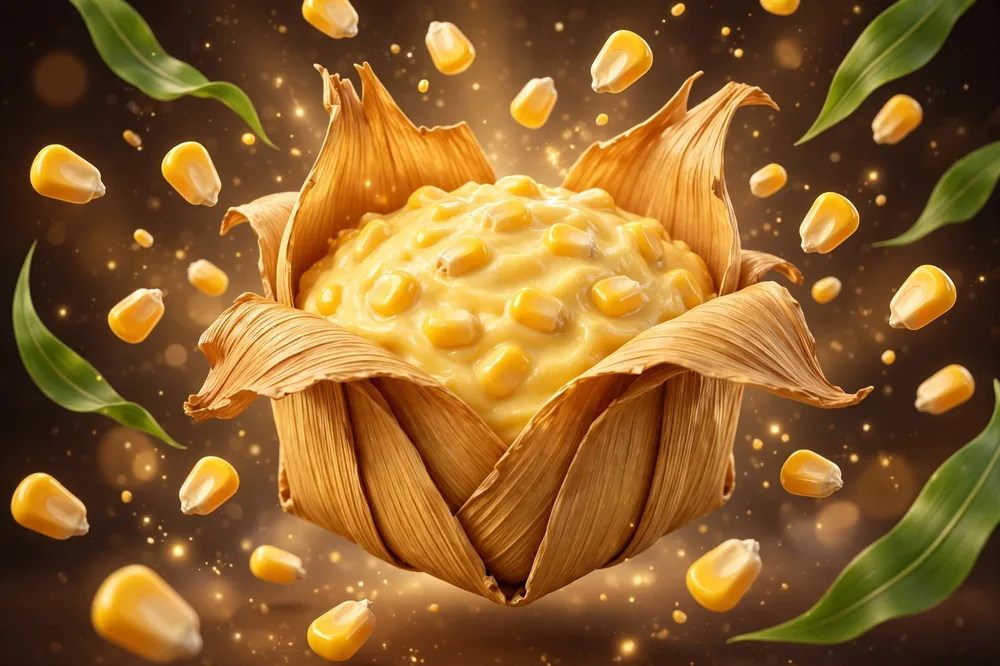
What Is Humita en Chala?
At its heart, humita en chala is corn, treated with respect. Fresh corn kernels — called choclo in much of South America — are grated or ground into a thick, creamy paste and cooked with sautéed onion and seasoning. Argentine versions often include cheese, and sometimes milk, squash, or sweet pepper. Small portions are spooned onto corn husks, folded into neat packages, tied, and steamed or boiled in salted water until soft.
The word itself carries history. “Humita” comes from the Quechua word humint’a, and the dish has pre-Hispanic, Andean roots. It is traditionally made across Argentina, Bolivia, Chile, Ecuador, and Peru, each giving it a local accent. In Argentina, humita is usually vegetarian — meat is not part of the classic recipe — a rare standout on menus dominated by grilled beef. For more background on its origins and regional forms, see this authentic humitas en chala guide.
En Chala vs En Olla vs Tamale
Knowing the three main forms saves you from ordering the wrong one:
- Humita en chala: the wrapped parcel. Corn paste folded inside corn husks and steamed or boiled. This is the dish most people mean when they search the full phrase.
- Humita en olla: the same corn cream, cooked in a pot and served by the spoonful, often in a clay dish — a soft stew rather than a parcel.
- Empanada de humita: the corn mixture used as a filling inside a baked empanada pastry. Delicious, but not the same dish — and far more common on menus.
Humita is also often compared to the tamale, and the comparison is useful up to a point. Both are wrapped and steamed, but a tamale is usually built from nixtamalized corn dough (masa) and often filled with meat, while humita is made from fresh corn itself and is rarely stuffed with meat. Expect a creamier, more purely corn-forward bite.
Where the Best Versions Come From
In Argentina, the finest humita en chala comes from the northwest: Salta, Jujuy, and Tucumán, where corn grows well and Andean food traditions run deep. There it appears on regular menus, at markets, and at festivals — Tucumán hosts a Provincial Humita Festival each January. The further north you go, the easier the wrapped parcel is to find.
In Buenos Aires, the wrapped version is harder to find outside a home kitchen or a market stall selling regional food, while the empanada version is everywhere. Ask at traditional restaurants that lean into home-style cooking (comida casera) rather than steakhouse-style parrillas. Abroad, the same logic applies: a steak-and-empanada restaurant may still make humita en chala as a special or on request. Your best hunting grounds are cities with Argentine, Chilean, Peruvian, or Bolivian communities — family-run Argentine restaurants, Andean bakeries, Latin markets with a hot-food counter, food halls with a South American stall, and seasonal markets or cultural festivals.
How to Search “Near Me” the Smart Way
A plain “near me” search often fails for a dish this specific, because search engines match exact menu words. Try this sequence instead:
- Search in Spanish too: try “humita en chala cerca de mí” and “humita” plus your city. Many family-run places describe their food in Spanish first.
- Search the category, not just the dish: look for “Argentine restaurant near me,” “comida argentina,” and “Latin American market near me,” then check menus or call.
- Check maps and photos: on Google Maps, search a promising restaurant’s reviews and photos for “humita.” A photo of a husk-wrapped parcel is stronger evidence than a menu listing.
- Try delivery apps separately: search “humita” and “humitas” there, since the same kitchen may use different words in different apps.
- Ask the community: local Argentine or Latin American food groups on social media often know exactly which stall or restaurant makes it — and on which days.
The same search tricks that work for other Argentine specialties apply here, as our guide to finding the best empanada de atún near you shows: narrow terms, Spanish spellings, and menu photos beat one broad search.
What to Ask Before You Order
Because the word “humita” covers several dishes, a quick call can save a wasted trip. Ask:
- “Do you serve humita en chala — the corn parcel wrapped in husks — or only empanada de humita?”
- “Is it made fresh today, and is it savory or sweet?” (Argentine versions are usually savory; some neighboring countries make sweet ones.)
- “Does it contain cheese, and is it vegetarian?” (The classic Argentine recipe has no meat, but cheese and butter vary.)
- “Is it available every day, or only on weekends or as a special?” (Many kitchens make it in small batches that sell out.)
- “Can I order it for takeaway, and how many come per portion?”
If the answer is “we only have the empanada version,” that is still a good meal — just a different one. Note the place anyway: a kitchen that makes good empanada de humita may add the wrapped version as a special if customers keep asking.
Signs of a Good One — and Red Flags
A great humita en chala announces itself when you open the husk: a moist, creamy interior that holds its shape on a spoon, clear fresh-corn sweetness, and seasoning that never overwhelms the corn. Be cautious if the parcel is dry, gritty, or tastes mostly of flour — that suggests cornmeal filler rather than fresh corn. An overly sweet filling is also a warning sign in a place advertising an Argentine recipe, since the Argentine style is savory.
If You Cannot Find One Nearby
If no restaurant near you makes it, try making it at home: fresh corn in season, grated and cooked gently with onion, a little milk or cream, and cheese, then wrapped in husks and steamed, comes surprisingly close to the restaurant version. Alternatively, enjoy the closest cousin while you keep looking: a well-made empanada de humita delivers the same corn-cream flavor in pastry form, and some Latin markets sell frozen corn parcels that steam up well at home — just check that fresh corn comes first in the ingredients, not corn flour.
Make a Day of It
Because humita en chala often lives in small, family-run places, it pairs naturally with a family outing: plan the meal as the centerpiece near a park or market and keep the day unhurried. If children are coming along, a comfortable family table matters as much as the menu — see our guide to choosing a kids table and chair set for relaxed family meals at home. Afterwards, you can round the day out at an Urban Air trampoline and adventure park — corn parcels first, bouncing second.
Frequently Asked Questions
Is humita en chala vegetarian?
Usually, yes. The classic Argentine recipe contains no meat — just fresh corn, onion, seasoning, and often cheese or milk. Confirm dairy if you are vegan, since cheese and butter vary by kitchen.
Is humita en chala gluten-free?
Traditionally, yes: it is made from fresh corn, not wheat flour. Cross-contact is still possible in a shared kitchen, so ask if you have coeliac disease or a serious allergy.
What is the difference between humita en chala and a tamale?
Both are steamed in husks, but humita uses fresh ground corn and is rarely filled with meat, while tamales use nixtamalized corn dough (masa) and are often meat-filled. Humita tastes creamier and more purely of corn.
Why can I not find humita en chala near me?
Because it is a labor-intensive regional specialty, not a standard menu item. Many Argentine restaurants focus on steaks and empanadas, and only home-style kitchens or market stalls make the wrapped parcel — often in small batches. Searching in Spanish, calling ahead, and checking Latin markets improves your odds.
Faizi is a content writer at AllAboutFacts (hotteamnames.com), covering vocabulary, language tips, and everyday explainers.


